P1010770

Image by SeRg1o
P1010727

Image by SeRg1o
sf0015gn-am04
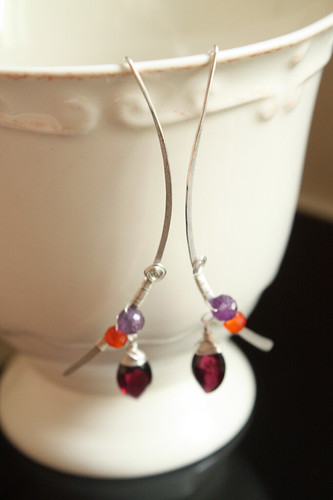
Image by Crafitti
If you like the unique style. The earrings were made for you. They were made from 925 silver hand wired with faceted round amethyst and carnelian with dangling faceted garnet marquee in the end. They have a little touch of oriental.
The size of the earrings are about 2.5 inches long.
sf0015gn-am03

Image by Crafitti
If you like the unique style. The earrings were made for you. They were made from 925 silver hand wired with faceted round amethyst and carnelian with dangling faceted garnet marquee in the end. They have a little touch of oriental.
The size of the earrings are about 2.5 inches long.
]]>On my honor

Image by reconstructionist
I am pretty pleased with how this scarf turned out! I *will* be wearing this everyday- you know how I do when I like something!
Oh! And I’m sporting my new white bloomers underneath everything.
And that top is getting some pretty heavy rotation- it’s a renaissance fair blouse from Etsy. Yes!
Reginald Pole, Archbishop of Canterbury, son of Margaret Plantagenet, grandson of George, Duke of Clarence

Image by lisby1
by Unknown artist,painting,after 1556
Reginald Cardinal Pole (12 March 1500 – 17 November 1558) was an English Cardinal in the Catholic Church, and the last Catholic Archbishop of Canterbury, holding office during the Counter Reformation.
Pole was born in at Stourton Castle, Staffordshire, England on 12 March 1500[1][2] to Sir Richard Pole and Margaret Pole, Countess of Salisbury. His maternal grandparents were George Plantagenet, 1st Duke of Clarence and Isabella Neville, Duchess of Clarence.
He was a member of Magdalen College, Oxford from about 1512 until about 1519. He was taught by William Latimer and Thomas Linacre, and admitted BA on 27 June 1515. In February 1518 Henry granted him the deanery of Wimborne Minster, Dorset; after which he was Dean of Exeter[3] .
In 1521, Pole went to Padua, where he met such leading Renaissance figures as Pietro Bembo, Gianmatteo Giberti (formerly pope Leo X’s datary and chief minister), Jacopo Sadoleto, Gianpietro Carafa (the future Pope Paul IV), Rodolfo Pio, Otto Truchsess, Stanislaus Hosius, Cristoforo Madruzzo, Giovanni Morone, Pier Paolo Vergerio the younger, Pietro Martire Vermigli (Peter Martyr) and Vettor Soranzo. The last three were eventually condemned as heretics by the Catholic Church, with Vermigli – as a well-known Protestant theologian – having a significant share in the Reformation in Pole’s native England.
His studies were partly financed by his election as a fellow of Corpus Christi College, Oxford, on 14 February 1523, which allowed him to study abroad for three years.
Pole returned home in July 1526, when he went to France, escorted by Thomas Lupset. Henry VIII offered him the archbishopric of York or the diocese of Winchester if he would support his divorce from Catherine of Aragon. Pole withheld his support and went into self-imposed exile in France and Italy in 1532, continuing his studies in Padua and Paris.
The final break between Pole and the King followed upon Thomas Cromwell, Cuthbert Tunstall, Thomas Starkey, and others addressing questions to Pole on behalf of the King. He answered by sending Henry a copy of his published treatise Pro ecclesiasticae unitatis defensione which, besides being a theological reply to the questions, was a strong denunciation of the king’s policies.
The incensed King, with Pole himself out of his reach, took a terrible revenge upon Pole’s family members. Though Pole’s mother and his elder brother had written to him in reproof of his attitude and action, the King did not spare them. In November 1538, Reginald Pole’s eldest brother Henry Pole, Baron Montagu, another son (of Margaret Pole) and other relatives were arrested on a charge of treason, though Thomas Cromwell had previously written that they had "little offended save that he [the Cardinal] is of their kin", they were committed to the Tower of London, and in January, with the exception of his brother Geoffrey Pole, they were executed.
Reginald Pole’s mother Margaret was also arrested, kept for two years under severe conditions in the Tower, and finally executed in 1541, protesting her innocence until the last – a highly publicised case which was considered a grave miscarriage of justice both at the time and later. Pole is known to have said that he would "…never fear to call himself the son of a martyr". She was beatified many centuries later, in 1886 by Pope Leo XIII.
Aside from the aforementioned oppositional treatise, King’s Henry’s harshness towards the Pole family might have derived from Pole’s mother, Margaret Pole née Plantagenet, being considered the last member of the House of Plantagenet. Under some circumstances, that fact could have made Reginald – until he definitely entered the clergy – a possible contender for the throne itself. Indeed, in 1535 Pole was considered by Eustace Chapuys, the Imperial ambassador to England, as a possible husband for Princess Mary, later Mary I of England.
Pole was made cardinal under Pope Paul III in 1536, over Pole’s own objections. In 1542 he was appointed as one of the three papal legates to preside over the Council of Trent, and after the death of Pope Paul III in 1549 Pole at one point had nearly the two-thirds of the vote he needed to become Pope himself [4] at the papal conclave, 1549-1550.
The death of Edward VI Tudor on 6 July 1553 and the accession of Mary I to the throne of England hastened Pole’s return from exile, as papal legate. In 1554 Cardinal Pole came to England to receive the kingdom back into the Roman fold. However, Mary and Emperor Charles V deliberately delayed him until 20 November 1554, due to apprehension that Pole might oppose the Queen’s forthcoming marriage to Charles’ son, Philip II of Spain.[5]
Pole’s return was followed by an Act of Parliament, the Revival of the Heresy Acts. This revived three former Acts against heresy; the letters patent of 1382 of King Richard II, an Act of 1401 of King Henry IV, and an Act of 1414 of King Henry V. All three of these laws had been repealed under King Henry VIII and King Edward VI.[6] On 13 November 1555, Cranmer was officially deprived of the See of Canterbury.[7] Under Mary’s rule, Pole was finally ordained as a priest on 20 March 1556 and raised to Archbishop of Canterbury, an office he would hold until his death. He was also Chancellor of both Oxford and Cambridge universities.[8] As well as his religious duties, he was in effect the Queen’s chief minister and adviser. Many former enemies, including Thomas Cranmer, signed recantations affirming their religious belief in transubstantiation and papal supremacy.[9] Despite this, which should have absolved them under Mary’s own Heresy Act, the Queen could not forget their responsibility for her mother’s unhappy divorce.[10]
In 1555, Mary began burning Protestants for heresy, executing 220 men and 60 women before her death in 1558. Pole shares responsibility for these persecutions which – contrary to his intention – contributed to the ultimate victory of the English Reformation.[11] As the reign wore on, an increasing number of people turned against Mary and her government,[12] and some people who had been indifferent to the English Reformation began turning against Catholicism.[13][14] Writings such as John Foxe’s 1568 Book of Martyrs, which emphasized the sufferings of the reformers under Mary, helped shape popular opinion against Roman Catholicism in England for generations.[12][14]
Reginald Cardinal Pole died in London on 17 November 1558, at about 7:00pm, nearly twelve hours after Queen Mary’s death from illness.[15] He was buried on the north side of the Corona at Canterbury Cathedral.
]]>Renaissance Faire 2009

Image by Parker Knight
Renaissance Faire 2009

Image by Parker Knight
Renaissance Faire 2009

Image by Parker Knight
Ren Faire 2011
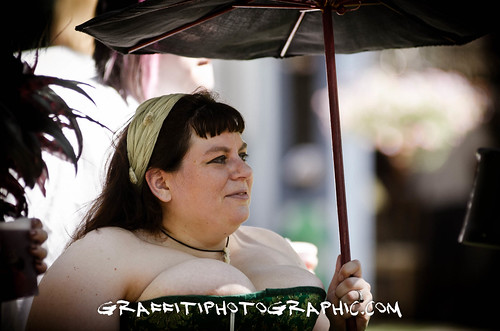
Image by Graffiti Photographic
A Day at the Bristol Renaissance Faire 2011
Ren Faire 2011
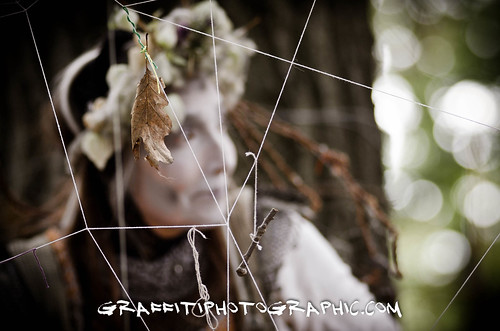
Image by Graffiti Photographic
A Day at the Bristol Renaissance Faire 2011
Ren Faire 2011
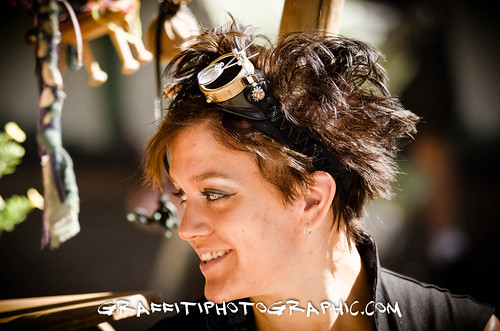
Image by Graffiti Photographic
A Day at the Bristol Renaissance Faire 2011
The Annunciation of the Virgin Deal

Image by failing_angel
Mixed material tapestry by Grayson Perry
Part of ‘The Vanity of Small Differences’ – a series of 6 tapestries (200x400cm)
In The Vanity of Small Differences Grayson Perry explores his fascination with taste and the visual story it tells of our interior lives in a series of six tapestries at Victoria Miro and three programmes, All in the Best Possible Taste with Grayson Perry, for Channel 4. The artist goes on a safari amongst the taste tribes of Britain, to gather inspiration for his artworks, literally weaving the characters he meets into a narrative partly inspired by Hogarth’s A Rake’s Progress.
Grayson Perry comments: "The tapestries tell the story of class mobility, for I think nothing has as strong an influence on our aesthetic taste as the social class in which we grow up. I am interested in the politics of consumerism and the history of popular design but for this project I focus on the emotional investment we make in the things we choose to live with, wear, eat, read or drive. Class and taste run deep in our character – we care. This emotional charge is what draws me to a subject".
Perry has always worked with traditional media; ceramics, cast iron, bronze, printmaking and tapestry. He is interested in how each historic category of object accrues over time intellectual and emotional baggage. Tapestry is the art form of grand houses: depicting classical myths, historical and religious scenes and epic battles. In this series of works Perry plays with idea of using this ancient allegorical art to elevate the commonplace dramas of modern British life.
The artist’s primary inspiration was A Rake’s Progress (1732 -33) by William Hogarth, which in eight paintings tells the story of Tom Rakewell, a young man who inherits a fortune from his miserly father, spends it all on fashionable pursuits and gambling, marries for money, gambles away a second fortune, goes to debtors’ prison and dies in a madhouse.
The Vanity of Small Differences tells the story of the rise and demise of Tim Rakewell and is composed of characters, incidents and objects Perry encountered on journeys through Sunderland, Tunbridge Wells and The Cotswolds. Hogarth has long been an influence on Perry’s works, his Englishness, his robust humour and his depiction of, in his own words, ‘modern moral subjects’. The secondary influence comes from Perry’s favourite form of art, early Renaissance painting.
Each of the six images, to a greater or lesser extent, pays homage to a religious work. Including Masaccio’s Expulsion from the Garden of Eden, Matthias Grünewald’s Isenheim Altarpiece, Rogier Van de Weyden’s Lamentation and three different paintings of The Annunciation by Carlo Crivelli, Grünewald and Robert Campin. The images also reference the pictorial display of wealth and status in The Arnolfini Portrait by Jan Van Eyck and Mr & Mrs Andrews by Thomas Gainsborough. Woven into each tapestry are snatches of text, each one in the voice of a participant in the scene illustrated. Each image also features a small dog, reminiscent of Hogarth’s beloved pug, Trump.
The Annunciation of the Virgin Deal, 2012
Tim is relaxing with his family in the kitchen of his large, rural (second) home. His business partner has just told him he is now an extremely wealthy man as they have sold their software business to Richard Branson.
On the table is a still life demonstrating the cultural bounty of his affluent lifestyle. His parents-in-law read and his elder child plays on the rug. Tim dandles his baby while his wife tweets.
This image includes references to three different paintings of the Annunciation, by Carlo Crivelli (the vegetables), Matthias Grunewald (his colleague’s expression) and Robert Campin (the jug of lilies). The convex mirror and discarded shoes are reminders of that great pictorial display of wealth and status, The Arnolfini Portrait, by Jan Van Eyck.
[Initial text from Victoria Miro Gallery, description of each piece by Grayson Perry from C4 website]
Previously a furniture factory, the Victoria Miro Gallery lies just off City Road. The garden at the back also holds a reclaimed part of Regent’s Canal at Wenlock Basin.
The Annunciation of the Virgin Deal

Image by failing_angel
Mixed material tapestry by Grayson Perry
Part of ‘The Vanity of Small Differences’ – a series of 6 tapestries (200x400cm)
In The Vanity of Small Differences Grayson Perry explores his fascination with taste and the visual story it tells of our interior lives in a series of six tapestries at Victoria Miro and three programmes, All in the Best Possible Taste with Grayson Perry, for Channel 4. The artist goes on a safari amongst the taste tribes of Britain, to gather inspiration for his artworks, literally weaving the characters he meets into a narrative partly inspired by Hogarth’s A Rake’s Progress.
Grayson Perry comments: "The tapestries tell the story of class mobility, for I think nothing has as strong an influence on our aesthetic taste as the social class in which we grow up. I am interested in the politics of consumerism and the history of popular design but for this project I focus on the emotional investment we make in the things we choose to live with, wear, eat, read or drive. Class and taste run deep in our character – we care. This emotional charge is what draws me to a subject".
Perry has always worked with traditional media; ceramics, cast iron, bronze, printmaking and tapestry. He is interested in how each historic category of object accrues over time intellectual and emotional baggage. Tapestry is the art form of grand houses: depicting classical myths, historical and religious scenes and epic battles. In this series of works Perry plays with idea of using this ancient allegorical art to elevate the commonplace dramas of modern British life.
The artist’s primary inspiration was A Rake’s Progress (1732 -33) by William Hogarth, which in eight paintings tells the story of Tom Rakewell, a young man who inherits a fortune from his miserly father, spends it all on fashionable pursuits and gambling, marries for money, gambles away a second fortune, goes to debtors’ prison and dies in a madhouse.
The Vanity of Small Differences tells the story of the rise and demise of Tim Rakewell and is composed of characters, incidents and objects Perry encountered on journeys through Sunderland, Tunbridge Wells and The Cotswolds. Hogarth has long been an influence on Perry’s works, his Englishness, his robust humour and his depiction of, in his own words, ‘modern moral subjects’. The secondary influence comes from Perry’s favourite form of art, early Renaissance painting.
Each of the six images, to a greater or lesser extent, pays homage to a religious work. Including Masaccio’s Expulsion from the Garden of Eden, Matthias Grünewald’s Isenheim Altarpiece, Rogier Van de Weyden’s Lamentation and three different paintings of The Annunciation by Carlo Crivelli, Grünewald and Robert Campin. The images also reference the pictorial display of wealth and status in The Arnolfini Portrait by Jan Van Eyck and Mr & Mrs Andrews by Thomas Gainsborough. Woven into each tapestry are snatches of text, each one in the voice of a participant in the scene illustrated. Each image also features a small dog, reminiscent of Hogarth’s beloved pug, Trump.
The Annunciation of the Virgin Deal, 2012
Tim is relaxing with his family in the kitchen of his large, rural (second) home. His business partner has just told him he is now an extremely wealthy man as they have sold their software business to Richard Branson.
On the table is a still life demonstrating the cultural bounty of his affluent lifestyle. His parents-in-law read and his elder child plays on the rug. Tim dandles his baby while his wife tweets.
This image includes references to three different paintings of the Annunciation, by Carlo Crivelli (the vegetables), Matthias Grunewald (his colleague’s expression) and Robert Campin (the jug of lilies). The convex mirror and discarded shoes are reminders of that great pictorial display of wealth and status, The Arnolfini Portrait, by Jan Van Eyck.
[Initial text from Victoria Miro Gallery, description of each piece by Grayson Perry from C4 website]
Previously a furniture factory, the Victoria Miro Gallery lies just off City Road. The garden at the back also holds a reclaimed part of Regent’s Canal at Wenlock Basin.
The Annunciation of the Virgin Deal

Image by failing_angel
Mixed material tapestry by Grayson Perry
Part of ‘The Vanity of Small Differences’ – a series of 6 tapestries (200x400cm)
In The Vanity of Small Differences Grayson Perry explores his fascination with taste and the visual story it tells of our interior lives in a series of six tapestries at Victoria Miro and three programmes, All in the Best Possible Taste with Grayson Perry, for Channel 4. The artist goes on a safari amongst the taste tribes of Britain, to gather inspiration for his artworks, literally weaving the characters he meets into a narrative partly inspired by Hogarth’s A Rake’s Progress.
Grayson Perry comments: "The tapestries tell the story of class mobility, for I think nothing has as strong an influence on our aesthetic taste as the social class in which we grow up. I am interested in the politics of consumerism and the history of popular design but for this project I focus on the emotional investment we make in the things we choose to live with, wear, eat, read or drive. Class and taste run deep in our character – we care. This emotional charge is what draws me to a subject".
Perry has always worked with traditional media; ceramics, cast iron, bronze, printmaking and tapestry. He is interested in how each historic category of object accrues over time intellectual and emotional baggage. Tapestry is the art form of grand houses: depicting classical myths, historical and religious scenes and epic battles. In this series of works Perry plays with idea of using this ancient allegorical art to elevate the commonplace dramas of modern British life.
The artist’s primary inspiration was A Rake’s Progress (1732 -33) by William Hogarth, which in eight paintings tells the story of Tom Rakewell, a young man who inherits a fortune from his miserly father, spends it all on fashionable pursuits and gambling, marries for money, gambles away a second fortune, goes to debtors’ prison and dies in a madhouse.
The Vanity of Small Differences tells the story of the rise and demise of Tim Rakewell and is composed of characters, incidents and objects Perry encountered on journeys through Sunderland, Tunbridge Wells and The Cotswolds. Hogarth has long been an influence on Perry’s works, his Englishness, his robust humour and his depiction of, in his own words, ‘modern moral subjects’. The secondary influence comes from Perry’s favourite form of art, early Renaissance painting.
Each of the six images, to a greater or lesser extent, pays homage to a religious work. Including Masaccio’s Expulsion from the Garden of Eden, Matthias Grünewald’s Isenheim Altarpiece, Rogier Van de Weyden’s Lamentation and three different paintings of The Annunciation by Carlo Crivelli, Grünewald and Robert Campin. The images also reference the pictorial display of wealth and status in The Arnolfini Portrait by Jan Van Eyck and Mr & Mrs Andrews by Thomas Gainsborough. Woven into each tapestry are snatches of text, each one in the voice of a participant in the scene illustrated. Each image also features a small dog, reminiscent of Hogarth’s beloved pug, Trump.
The Annunciation of the Virgin Deal, 2012
Tim is relaxing with his family in the kitchen of his large, rural (second) home. His business partner has just told him he is now an extremely wealthy man as they have sold their software business to Richard Branson.
On the table is a still life demonstrating the cultural bounty of his affluent lifestyle. His parents-in-law read and his elder child plays on the rug. Tim dandles his baby while his wife tweets.
This image includes references to three different paintings of the Annunciation, by Carlo Crivelli (the vegetables), Matthias Grunewald (his colleague’s expression) and Robert Campin (the jug of lilies). The convex mirror and discarded shoes are reminders of that great pictorial display of wealth and status, The Arnolfini Portrait, by Jan Van Eyck.
[Initial text from Victoria Miro Gallery, description of each piece by Grayson Perry from C4 website]
Previously a furniture factory, the Victoria Miro Gallery lies just off City Road. The garden at the back also holds a reclaimed part of Regent’s Canal at Wenlock Basin.
]]>Ren Faire 2011

Image by Graffiti Photographic
A Day at the Bristol Renaissance Faire 2011
Ren Faire 2011

Image by Graffiti Photographic
A Day at the Bristol Renaissance Faire 2011
Ren Faire 2011

Image by Graffiti Photographic
A Day at the Bristol Renaissance Faire 2011
“Copper Celt”

Image by Elif Ayiter/Alpha Auer/…./
After a long absence we are back with "Copper Celt" designed by Grapho: The medieval armor which was largely used for the attachments is a full permissions item by Wyld Magic which Grapho has minutely retextured as well as modified and added onto. This is a unisex outfit with skins and texture leotards for both sexes. All the attachments (and believe me there are a lot of them!) can be worn by men and women alike, although some scaling up may be called for where men are concerned. The ladies also get an extra skirt btw…
Visit alpha.tribe at Klein:
slurl.com/secondlife/Klein/55/116/63
“Copper Celt”

Image by Elif Ayiter/Alpha Auer/…./
After a long absence we are back with "Copper Celt" designed by Grapho: The medieval armor which was largely used for the attachments is a full permissions item by Wyld Magic which Grapho has minutely retextured as well as modified and added onto. This is a unisex outfit with skins and texture leotards for both sexes. All the attachments (and believe me there are a lot of them!) can be worn by men and women alike, although some scaling up may be called for where men are concerned. The ladies also get an extra skirt btw…
Visit alpha.tribe at Klein:
slurl.com/secondlife/Klein/55/116/63
Albion_Valkyrja_Viking_Sword_2 – Kopi
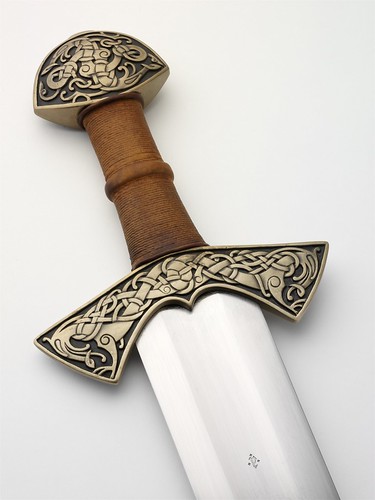
Image by Albion Europe ApS
The Valkyrja Limited Edition Viking Sword
Albion_Valkyrja_Viking_Sword_6 – Kopi
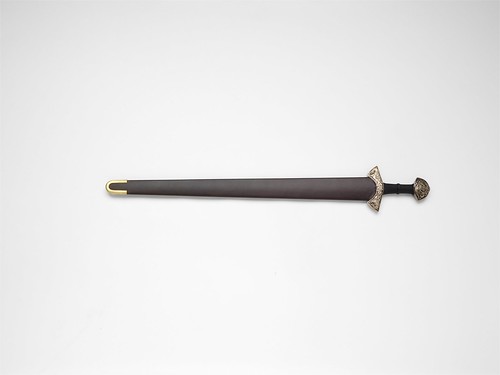
Image by Albion Europe ApS
The Valkyrja Limited Edition Viking Sword
Hope making an attempt to appear significant – that is hopeless (IMG_4555a)

Impression by Alaskan Dude
I experienced the opportunity to shoot with the pretty, entertaining, bubbly, very photogenic, and sweet Hope and her spectacular companion Allison with equally donning chain mail. I can not believe how blessed I am!
There is a chain mail shop at the Texas Renaissance Good during the working day they sponsor a chain mail trend demonstrate – it is a photographer’s delight. Doing work with beautiful types this kind of as Hope and Allison is absolutely a single on the highlights of the Reasonable. I hope to be ready to shoot with each of them once again at the 2012 TRF!
Two of Texas finest chain mail versions (IMG_4578a)

Impression by Alaskan Dude
I experienced the likelihood to shoot with the lovely, exciting, bubbly, extremely photogenic, and sweet Hope and her beautiful companion Allison with both donning chain mail. I can’t think how fortunate I am!
There is a chain mail shop at the Texas Renaissance Honest for the duration of the day they sponsor a chain mail style display – it is a photographer’s delight. Operating with pretty types such as Hope and Allison is undoubtedly 1 on the highlights of the Fair. I hope to be ready to shoot with equally of them once more at the 2012 TRF!
]]>